Imagined futures let robot models learn from human videos without action labels
ThinkWorld, a preprint framework from NVIDIA-affiliated researchers, rewards a robot model when the imagined outcome of a planned motion matches what real footage shows.
Robots that follow written instructions are, for now, only as versatile as the demonstrations they learn from, and recording those demonstrations is slow and costly. A new framework called ThinkWorld proposes a way to let ordinary videos of people doing everyday tasks help close the gap. The model plans each action as a short chain of motions, imagines where that chain would lead, and is rewarded when the imagined future matches what the footage actually shows. The work, from authors whose listed affiliation is NVIDIA, is a preprint on arXiv and has not yet been peer reviewed.
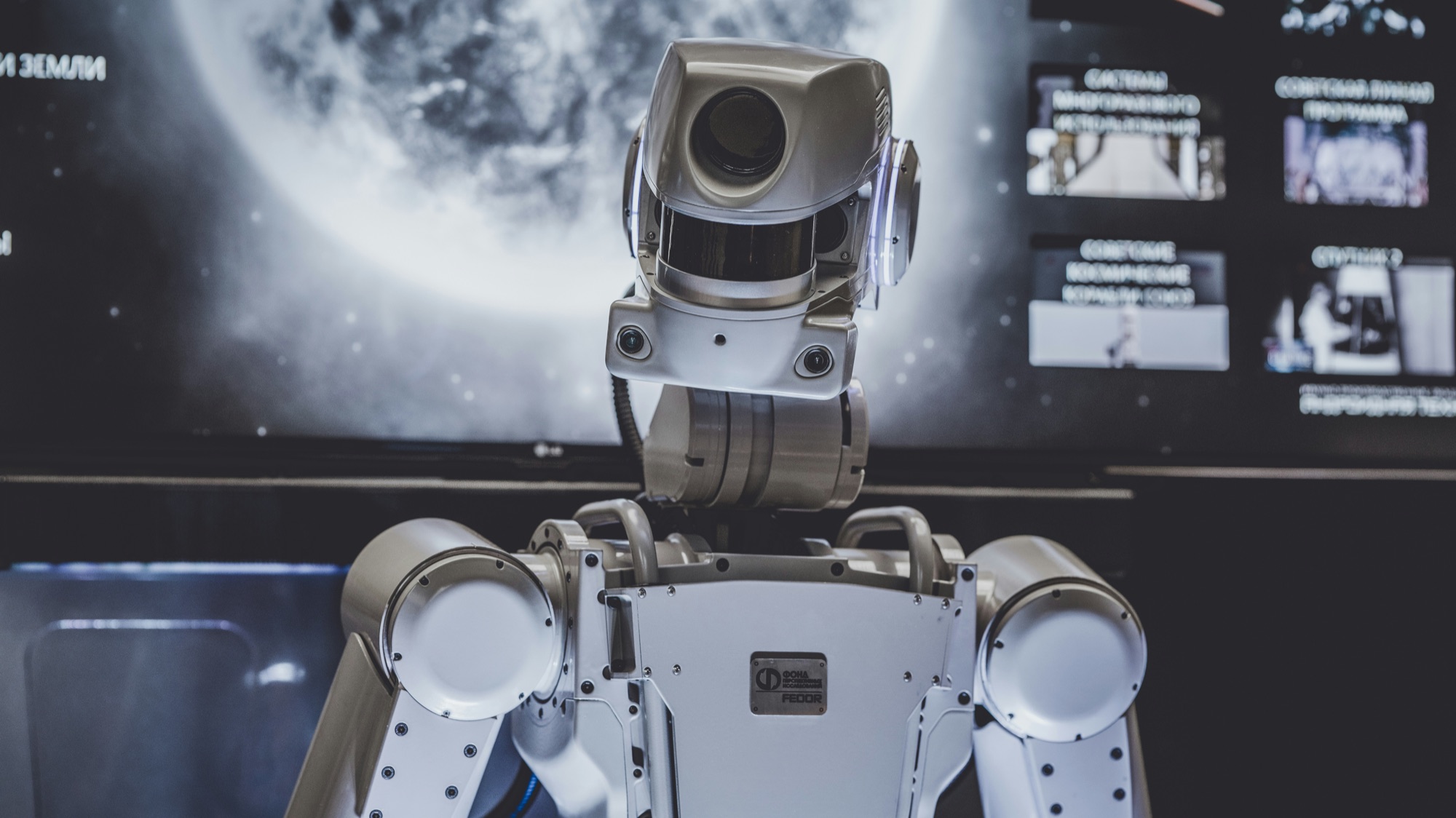
The systems in question are vision-language-action (VLA) models, which take in camera images and an instruction in plain language and output commands for a robot. According to the authors, such models have made substantial progress in manipulation, the grasping and moving of objects, but their ability to generalise is limited by the range of action-labelled robot demonstrations available. These are recordings in which every moment is paired with the exact commands sent to the machine. Videos of humans offer far broader coverage of behaviours and settings, yet they carry no such labels, and a human hand is not a robot gripper. The paper describes this as a fundamental trade-off between data that scales and data that is explicitly tied to actions.
ThinkWorld's answer is to change what the model reasons about. Each of its action thoughts is represented as what the authors call a Chain-of-Dynamics: a sequence of discrete motion tokens, symbols drawn from a fixed vocabulary in much the same way that a language model breaks text into word fragments. Together the tokens describe the intermediate changes that connect the scene as it is now to a future state. Because the chain describes how the world moves rather than how a particular set of joints should turn, it is intended to serve as a common action representation across embodiments, meaning different physical bodies, whether a person's arm or a robot's.
Training happens in two stages. The chains are first initialised using conventional action-labelled robot demonstrations. The model then predicts the future that each chain would bring about, a step the authors call world imagination, and uses reinforcement learning, a method in which behaviour is shaped by rewards, to strengthen the chains whose predictions better match the outcome that was actually observed. The key point is that this check needs only footage of a situation before and after, not a record of motor commands. That allows videos without action annotations to provide direct supervision from observed changes of state, so that human and robot experience refine the same reasoning space.
The authors report experiments both in simulation and on physical robots. They say the results show effective transfer of skills from human video to robots, and strong generalisation to tasks and environments the system had not encountered during training.
The abstract does not give figures, name the benchmarks or robots used, or say how the method compares with existing approaches, so the size of the improvement cannot be judged from it. The framework also still begins from labelled robot demonstrations, leaving open how far human video alone can carry it. Those details, and independent scrutiny through peer review, will determine how much of the claimed generality holds up.
- Paper
- ThinkWorld: World Imagination Reinforces Chain-of-Dynamics Reasoning
- Authors
- Chaehyun Kim, Chi-Pin Huang, Jisoo Kim, Min-Hung Chen, Yu-Chiang Frank Wang, Seungryong Kim et al.
- Venue
- arXiv preprint — not yet peer reviewed · 27 October 2026
- Link
- arxiv.org/abs/2610.37666